It's What's for Dinner
Some of you might remember the halcyon days in which, faced with a looming (self-imposed, it must be said) fortnightly deadline, I would dip into the Red Clay archives and resurrect some desiccated trash I wrote in a drunken stupor one Tuesday evening in the unmemorable year 2010. Well, at some point I sucked the last of the light sweet crude of my larval writings out of the ol’ Google Drive, and nowadays I just let the deadline drift pass, safe in the surety that nobody could be as anal about the matter as I. There’s still stuff out there I could dig up but it’s buried in forgotten notebooks on bookshelves all over my house—the oil shale and tar sands of my output—but let’s leave that for posthumous publication, in a volume called Lost Writings: 1997-2026 or whatever.
Anyway, last night was one of my nights to make dinner, and I made what is rapidly becoming a favorite at Chez Mooré: skillet chicken thighs with schmalzy tomatoes. I’m not going to be so gauche as to turn this heretofore bowel-regular semi-literary extrusion into a goddamn recipe blog, so if you want to know how to make this you’ll have to come have dinner at the house. Back to my point—I’m there, in the kitchen, slicing onions, quaffing beer, and listening to a conversation between Jon Stewart and Fareed Zakaria. As ya do.
This is some interesting shit, folks. I knew Fareed was a smart guy, but in my considered opinion, cable news is not a smart medium, so whatever his charms, they were largely invisible, in the same way a Mike Trout home run is invisible when it happens in the 8th inning of a 9-2 loss to Cleveland in the 153rd game of another unremarkable Angels season.
But give him a solid hour to chat with fellow smart guy Jon Stewart and watch the sparks fly. They range across a variety of topics all stemming from the sorry state of the world today, speculating about where we’re headed and how we got here—subjects that have been talked to death but seldom with such insight and clarity. I won’t lie—it’s largely dark and frightening stuff, but if you’re looking for some different perspectives and a healthy give and take sort of conversation, I strongly encourage you to give it a listen.
I feel like posting this link this addresses a concern of mine, that I should be writing more frequently about Donald Trump and all of the damage he’s doing. We’re in a crisis; is it irresponsible for me to ignore the moment in favor of a light and possibly slightly bullshitty narrative about the time I stole a stack of over a thousand free Big Mac coupons from the vault in my high school principle’s office?
Honestly probably not. I think, in the grand scheme of things, writing silly bullshit about silly bullshit is my purpose in this world, and Trump just doesn’t merit entry into my beastiary. He’s not really an interesting person, except in the way that car crashes are interesting. They’ll catch your eye but who would want to linger on such material? The real puzzling thing about the time in which we now live is the readiness with which our institutions meekly laid down their weapons when faced with attack by a third-rate game show host with obvious psychological issues. Congratulations, Vichy France, you now have a fig leaf. What was it they used to say about ARVN rifles during the Vietnam War? Never fired, only dropped once? Well move over guys. Make room for the Washington Post, CNN, Apple, Amazon, and most of the rest of the tech industry, the Democratic Party, most university presidents,1 and, well, we may as well throw the NRA in there too, even though we always knew they were full of shit.
But I get tired of writing about those people as well. Nobody, as I like to tell my colleagues, wants to work in a turd factory.
The fact is I think I’m more interested in reviving memories than in trying to squeeze any sense out of the present. I’m simply not a diarist. And I’m not in any way an expert on current events. I’m not without some historical perspective, however spotty and arbitrary it might be. But keeping up with all of this nonsense is exhausting and six months later it’s generally obvious that half of it was just noise anyway.
So back to cooking. I think about my grandmother a lot when I cook. I’m not a particularly great chef—for a long time I told myself I didn’t like cooking. It wasn’t true, it turns out, though I don’t think I’d want to do it all the time. A couple nights a week is pretty good. I look forward to my cooking nights, and not just because I’m usually tipsy by the time the first ingredient hits the cast iron. My grandma didn’t make such a grand fiesta out of cooking; after a storied career as a drinker she was mostly sober by the time I arrived in the world. And they didn’t have podcasts back then. She would just stand there in the blazing hot kitchen performing culinary miracles without anything to occupy her mind but, well, her thoughts I suppose. I have those too but sometimes I get tired of being alone with them. They make a lot of stupid jokes.
I do enjoy the zen quality of some of the work—cutting up vegetables for instance. But I go batshit crazy in the absence of some kind of serotonin release. I have no idea if she was like that. I suspect not, but at the same time I suppose overindulgence in alcohol is perhaps a facet of that same craving. As I say, though, she was mostly past that at least during the two years that my sister and I lived with her and my grandfather in the early 1980s, as well as the fifteen years that followed.
But she always seemed happy in the kitchen, and I do wonder what went through her mind when she was in there, whether she was conjuring up one of her colossal, hyper-greasy farmhand dinners or the winter morning breakfasts that my sister deftly stuffed into the cushion of her chair when nobody was looking. I presume she thought about the same sort of things I do. I was the only kid in my sixth-grade class who wanted to see Jimmy Carter reelected—a stridently liberal and somewhat fatalist approach to politics I inherited mostly from my parents but to a degree from her as well. My grandpa never said a word about politics, but then he didn’t say much.
So maybe she was thinking about what a fake sunshiny, race-baiting, scandal-mongering piece of shit Ronald Regan was, an idea which in the modern political milieu seems perhaps overwrought. Reagan was a villain but closer in his villainy to the bureaucrat who slow-walks your loan application than the mad man building a planet-destroying laser inside a hollow mountain in the Urals. He was a fake sunshiny, race-baiting, scandal-mongering piece of shit though, and the politics he championed were a step on the path to where we are now.
Maybe she was thinking about her grandparents. Her parents were both dead by the time she was sixteen, and I think she and her two younger brothers had to grow up in a hurry. I honestly don’t know what kind of relationship she had with her grandparents, if any. Maybe she thinking of her parents while she was making me fried smelt. Maybe she thinking about her brother Francis, who died in a gas explosion in Tucson, Arizona in 1958 Maybe she thinking of her youngest brother Lloyd, who needed her signature to enlist in the U.S. Navy after Pearl Harbor.
Maybe she was thinking about Pearl Harbor.
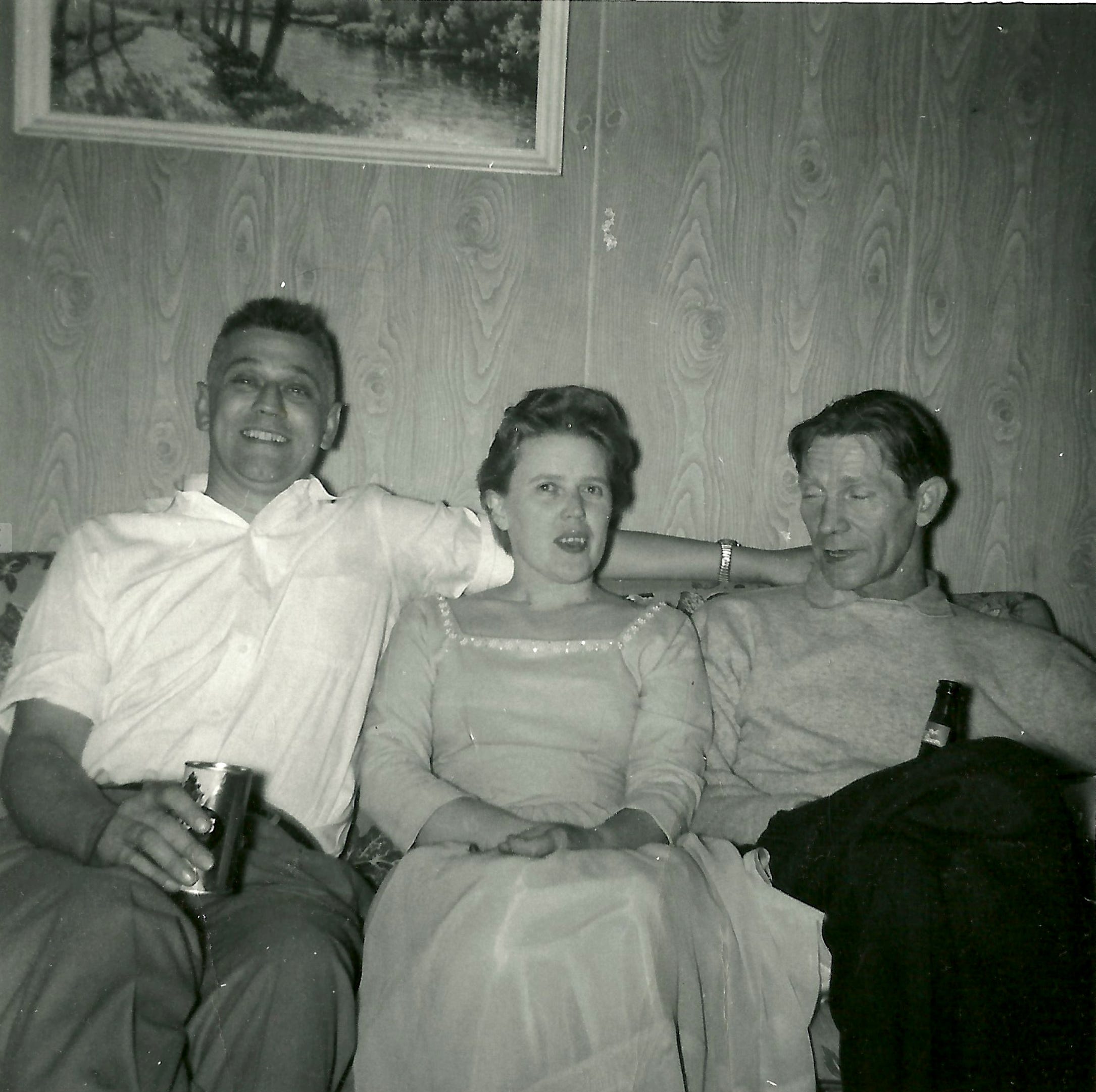
I heard someone earlier today say it’s not fun living in times of great historic change. It’s rare that anyone slips into the world and back out again without living through some kind of rupture. If you’d been born in the U.S. in October of 1945 and wanted the life of Riley, you’re late—you should have left in 2016 before the latest international cancer made its way down that golden escalator. That’s 71 years—a somewhat short life by modern standards, but there have been precious few stretches of time, in all of human history, as peaceful and prosperous. It was a peace primarily meant for certain people, but it wasn’t just a handful of aristocrats—it was pretty widespread, and grew moreso over time. It wasn’t perfect, but it was wildly unusual. Those of us who experienced it—and particularly those of us who grew up in its shade—are extraordinarily lucky.
But it’s still hard living through a rupture and not knowing what’s next. I suppose that’s the way she must have felt, sitting with friends in a soda shop that fateful Sunday morning. “They bombed Pearl Harbor,” she told me someone said, and admitted that at the time she wasn’t sure what Pearl Harbor was. But she was mad. Everyone was mad.
There in the kitchen in Clare, Michigan, chopping the ends off of green beans or whipping potatoes, she knew that the United States had come out not only victorious but dominant, four years later. She knew that Lloyd had survived his war with the Japanese without so much as a scratch, just as Francis and my grandpa’s brother John had survived the war in Europe. But I’m sure it was scary as shit in ‘41.
I don’t think it’s unreasonable to compare what we’re living through now to World War II. Or the Civil War for that matter. It sucks not knowing what lies ahead, but at least it’s not preordained. And at least so far it hasn’t changed how I make dinner.
If you need a break from the end of the world, I’ve got a musical treat for you. This is the product at least five or six years’ worth of weekly rehearsals and a year’s worth of recording, and I’m particularly proud of this one. I give you Dixie Highway,2 the second album from my band of the last fifteen years, Front Porch Session Players. My brother in rhythm, our drummer Scott Owens, has picked up his snare and moved to Texas—a victim of Trump’s war on renewable power (Scott is a solar power installer)—and the band has been on hiatus for a few months, but it looks like we’re going to start up again soon. I hope those of you nearby can come out and celebrate with us when we get back to the stage, hopefully in late March. Celebrate what? Whatever you want. The fact that, in spite of everything, there’s still music. That there are still other people around and some of them are alright. Beer. Smelt. Being alive.
I am inordinately proud of George Mason University for fighting back vociferously—first because any American university fighting back is good news but also because I am distantly related to George Mason and thus consider him my personal Founding Father.
I wish I could have had one of Grandma Loretta’s winter breakfasts. I would have stuffed it into my mouth instead of into the chair!
Bourbon. Pinto beans and cornbread. Dixie Highway. CSN&Y’s Déjà Vu. Wouldn’t want to do without.